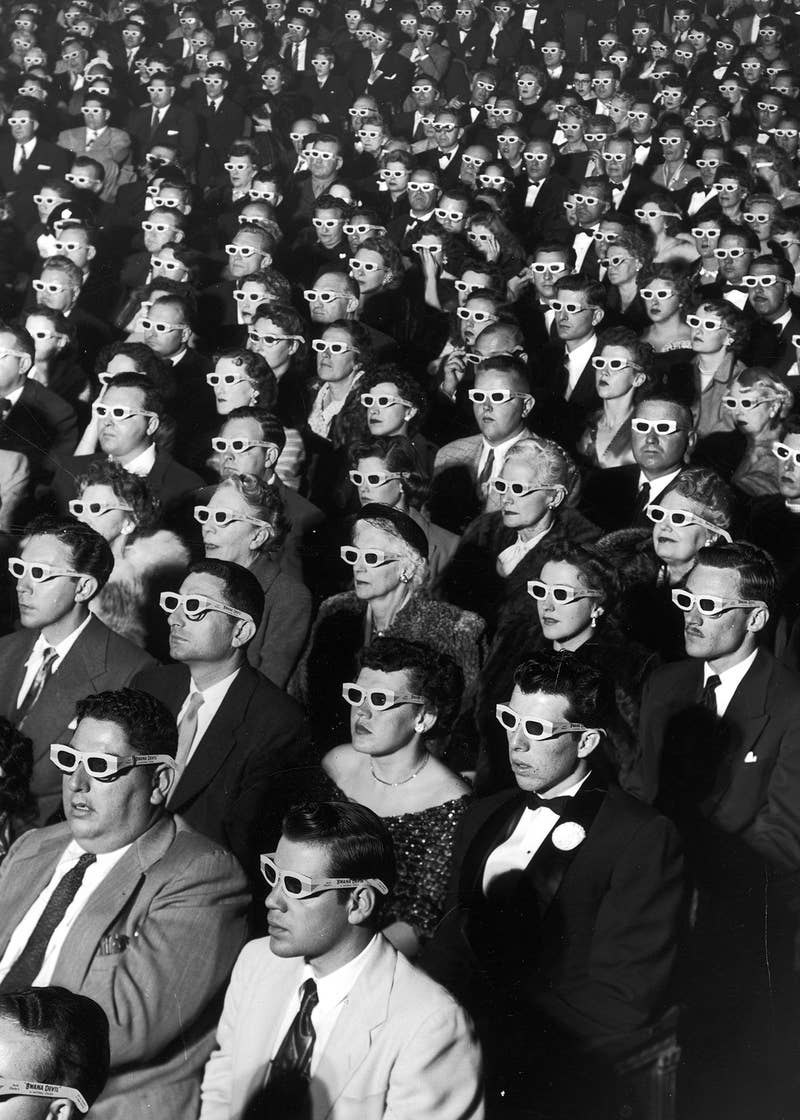
Nothing to see here folks except rose-colored history
Recently my wife got together with some old friends to play cards. During the game one of them began bemoaning the state of public education and what teachers are being "forced" to teach. Specifically the complaint was the teachings about race that were allegedly to be mandated and how this person's daughter, a young teacher, was balking at all this and might leave the profession. Supposedly her daughter objected with the statement, "we are not a racist country, Mom".
Wow. Fortunately I was outside on the deck enjoying a beer with a couple of others and was not at the card table indoors when this statement was made. Also fortunately even the players who are not very political immediately objected along the lines of 'how can you even say that?'. I mean slavery, lynchings, Jim Crow, come quickly to mind as counter arguments. From what I understand the card game essentially ended right about there.
This incident, and all the recent news stories about school board meetings being interrupted by those protesting the teaching of critical race theory, or objecting to any discussions about race, has got me thinking however of how American history is taught. Perhaps more accurately, how it isn't taught. Instead we receive a sanitized, almost mythical, rendering of our history. I mean I'm all for being a glass half full kind of nation, but there's positive spin, and then there's whitewashing. Next thing you know you end up with people truly believing we are not a racist country, or maybe we were but it is solidly in our past.
I present myself as Exhibit A in this matter. Mostly because it gives me a chance to brag about myself, but also to show what a poor job we have done historically with the teaching of history.
Back in my day, depending on the colleges you were applying to, besides taking the SATs, you were asked to take one or more Achievement Tests. These tests were subject specific. My recollection was I took three of these tests, one being American History. I chose that because American History had always been an interest of mine and I had always done well in that subject.
I aced it. Just as with the verbal and math sections of the SAT, the maximum score available on an Achievement test was 800. I scored an 800 on the American History Achievement test. It led to me being recognized and presented an award at my high school graduation.
The point being, besides bragging how I was smart at one point in my life, is that whatever they were teaching as the American History curriculum, I learned it. Well.
But what I have discovered in recent years as I read more articles and books, and follow historians on social media, is how little of our history I actually learned. Especially with regards to the history of race, race relations, slavery and the experience of African Americans in our country.
The history I learned in that regard can probably be summed up like this:
And from what I gather that is about all the discussion of race and race relations most conservatives, Republicans, and probably too many others would want in our classrooms.
That history omits and downplays so much of our history and explains why so many people can actually believe we do not need to confront or do anything about systemic racism. A few examples come to mind of what we were or were not taught that leave us ignorant of our own history and its continuing impacts.
The Constitution
We all know, I hope, about the 3/5 compromise. You know where this non-racist country allowed 3/5 of every slave to count towards a state's population for the purpose of assigning the number of representatives to the House, and therefore also the number of Electoral College votes.
But what about those other compromises? The ones that gave us the un-democratic institutions that in many ways continue to haunt us today, the Senate and the Electoral College. What brought that about?
It was taught to us as there being conflict at the Constitutional Convention between "large" states and "small" states. The small states were afraid a stronger, central, national government would be dominated by the larger, more populous states and the interests of the small states would be ignored, or maybe even worse.
The compromises? Besides the House of Representatives, the body initially envisioned as being the entire Congress with membership based on each states population, there would be a Senate with each state getting equal representation regardless of population. And the President would not be elected solely by popular vote, which again would be dominated by larger states. No there would be an Electoral College, so the President would need to win a majority of states, not necessarily the majority of votes.
The reality is that this depiction of large vs small states was a euphemism. It was really a dispute between slave and non-slave states. It so happened the non-slave states were the more populous northern states with the larger commercial hubs. The slave states were more agrarian and had smaller populations. Their real fear was that a central government based solely on population would be dominated by the non-slave states who would eventually look to curtail and eliminate slavery. As one of the chief architects of the Constitution, James Madison, wrote after the debates and compromises, the real division at the Convention was not between large and small states, but between north and south.
The Civil War
The Civil War is always taught as a glorious event in our history. We want a pat on the back for having fought it to end slavery. At least it was taught that way in northern public schools where I attended.
What was never mentioned, and I didn't realize until recent readings, is that we are about the only country in the world that had to fight a civil war to end slavery. Other countries passed laws or issued decrees, many of them doing so years or even decades before our Civil War. The US? It took huge armies in the field and killing hundreds of thousands of each other to get rid of slavery. I don't know what that says about us, but I'm guessing it's nothing good.
Jim Crow
Did I mention I scored a perfect 800 on the American History Achievement Test? Just wanted to be sure we don't lose sight of one of the main takeaways here. Anyway that aside what I learned and knew about Jim Crow laws was that they were enacted to restore the old power structure in the South. Impediments were set up to make it all but impossible for black people to register and to vote in the Southern states. And if those didn't work there was always the Ku Klux Klan to intimidate (another euphemism) blacks from voting. Oh yes and there were separate schools and they had to use separate bathrooms and water fountains.
Again it is only recently as I read more articles about this that I have learned how much of the Jim Crow laws and the Black Codes were actually economic in nature. It wasn't just to deny African Americans political or social power. It was also to deny them any opportunity of gaining economic power and status. What jobs a black person could hold, how much they could be paid, what type of business a black person could own or operate were all defined by these laws.
As one text put it:
The codes appeared throughout the South as a legal way to put Black citizens into indentured servitude, to take voting rights away, to control where they lived and how they traveled and to seize children for labor purposes...
The voting and separate facilities they taught us. The rest, not so much.
The GI Bill
Now mind you, any history class I took never got to the GI Bill. By the time you studied the European colonization, the Revolution, the Constitution and beginnings of the country, the War of 1812, and the Civil War, the school year was well past half way finished. The time from 1865 to however far you got by the end of the school year was always a blur. That is in some part why many Americans are so ignorant about the history of race and the history of the Labor movement, etc. Reconstruction, the Labor movement are raced through. A little more time is spent on the Spanish American War and World War I. Then you just have about enough time to squeeze in a little about the Great Depression and World War II. Then it was summer vacation.
So most Americans don't realize that the GI Bill was off limits for many African American service members after World War II. Not explicitly of course. There was nothing in the bill forbidding benefits for blacks or telling them they couldn't apply. But it's implementation was up to the states and local communities. As a result most black servicemen could not take advantage of the GI Bill to buy a home.
Besides the strength of union membership after World War II probably nothing did more to lift more people out of poverty or the working class and into the middle class in America than the GI Bill. People who would not have been able to buy a home and build up the equity and family wealth that home ownership can generate were now able to. But again, due to redlining and other discriminatory housing practices that avenue was shut off to African Americans.
This was not the only way that African Americans continued to be denied economic advancement but it is a prime example.
War on Drugs
Finally in the 1960s, after much agitation and protest, we passed the Civil Rights Act and the Voting Rights Act. The discriminatory and unfair practices for voting, education, separate facilities, housing discrimination, all were swept away and made illegal. Progress was finally here.
So how did America react? With the War on Drugs. One of Richard Nixon's chief domestic policy advisors, John Ehrlichman, later admitted that one of the main goals of the war on drugs was to disrupt the black community. It was a wink and a nod, especially to white southerners, not to fear all those rights acts, we'll keep "them" in their place.
The statistics are well known. Drug use and addiction rates among blacks and white is roughly equal. There are five times more whites than blacks in the USA. But blacks disproportionately are arrested, charged, prosecuted, convicted and imprisoned for relatively minor drug offenses compared to whites. It disrupts their families, their communities and removes many young black men from society, and not coincidentally, the voting rolls.
There could be endless more examples of where our history curriculum fails us. All the race riots that have taken place for example. Now there is a euphemism and a half. Every race riot is mobs of white people looting, burning and killing blacks - and we call it a "race riot". Until recently who had ever heard of the Tulsa Massacre? And now that we have, how many know it was just one of many such atrocities?
The fact is that slavery and race were very central concepts to the birth of our nation, to coin a phrase. And to put blinders on and ignore that solves nothing. We will never move to that dream where people are judged solely by the content of their character until we as a nation learn and face our entire history, namely that for too long and too many instances, it was the color of the skin that was more important. That doesn't require self-flagellation from whites, but it does require honesty and learning and facing facts. Admit where we fell, and continue to fall, short and desire and work to be better.
And that 800 i received on the American History Achievement Test (in case you forgot)? It should have been a 400 at best.
Wow. Fortunately I was outside on the deck enjoying a beer with a couple of others and was not at the card table indoors when this statement was made. Also fortunately even the players who are not very political immediately objected along the lines of 'how can you even say that?'. I mean slavery, lynchings, Jim Crow, come quickly to mind as counter arguments. From what I understand the card game essentially ended right about there.
This incident, and all the recent news stories about school board meetings being interrupted by those protesting the teaching of critical race theory, or objecting to any discussions about race, has got me thinking however of how American history is taught. Perhaps more accurately, how it isn't taught. Instead we receive a sanitized, almost mythical, rendering of our history. I mean I'm all for being a glass half full kind of nation, but there's positive spin, and then there's whitewashing. Next thing you know you end up with people truly believing we are not a racist country, or maybe we were but it is solidly in our past.
I present myself as Exhibit A in this matter. Mostly because it gives me a chance to brag about myself, but also to show what a poor job we have done historically with the teaching of history.
Back in my day, depending on the colleges you were applying to, besides taking the SATs, you were asked to take one or more Achievement Tests. These tests were subject specific. My recollection was I took three of these tests, one being American History. I chose that because American History had always been an interest of mine and I had always done well in that subject.
I aced it. Just as with the verbal and math sections of the SAT, the maximum score available on an Achievement test was 800. I scored an 800 on the American History Achievement test. It led to me being recognized and presented an award at my high school graduation.
The point being, besides bragging how I was smart at one point in my life, is that whatever they were teaching as the American History curriculum, I learned it. Well.
But what I have discovered in recent years as I read more articles and books, and follow historians on social media, is how little of our history I actually learned. Especially with regards to the history of race, race relations, slavery and the experience of African Americans in our country.
The history I learned in that regard can probably be summed up like this:
- America was colonized by European powers
- Somehow slaves ended up being brought here
- So we had slavery, and that was bad, but hey everyone else did too, so cut us some slack
- As the new nation formed and got going there was tension between slave and non-slave states
- We fought a Civil War and got rid of slavery; yay US!
- There was Jim Crow and some other backsliding and that was bad
- But then Martin Luther King Jr wrote and spoke one sentence in his entire life; and while not perfect the US of A makes progress toward that more perfect Union. End scene.
And from what I gather that is about all the discussion of race and race relations most conservatives, Republicans, and probably too many others would want in our classrooms.
That history omits and downplays so much of our history and explains why so many people can actually believe we do not need to confront or do anything about systemic racism. A few examples come to mind of what we were or were not taught that leave us ignorant of our own history and its continuing impacts.
The Constitution
We all know, I hope, about the 3/5 compromise. You know where this non-racist country allowed 3/5 of every slave to count towards a state's population for the purpose of assigning the number of representatives to the House, and therefore also the number of Electoral College votes.
But what about those other compromises? The ones that gave us the un-democratic institutions that in many ways continue to haunt us today, the Senate and the Electoral College. What brought that about?
It was taught to us as there being conflict at the Constitutional Convention between "large" states and "small" states. The small states were afraid a stronger, central, national government would be dominated by the larger, more populous states and the interests of the small states would be ignored, or maybe even worse.
The compromises? Besides the House of Representatives, the body initially envisioned as being the entire Congress with membership based on each states population, there would be a Senate with each state getting equal representation regardless of population. And the President would not be elected solely by popular vote, which again would be dominated by larger states. No there would be an Electoral College, so the President would need to win a majority of states, not necessarily the majority of votes.
The reality is that this depiction of large vs small states was a euphemism. It was really a dispute between slave and non-slave states. It so happened the non-slave states were the more populous northern states with the larger commercial hubs. The slave states were more agrarian and had smaller populations. Their real fear was that a central government based solely on population would be dominated by the non-slave states who would eventually look to curtail and eliminate slavery. As one of the chief architects of the Constitution, James Madison, wrote after the debates and compromises, the real division at the Convention was not between large and small states, but between north and south.
The Civil War
The Civil War is always taught as a glorious event in our history. We want a pat on the back for having fought it to end slavery. At least it was taught that way in northern public schools where I attended.
What was never mentioned, and I didn't realize until recent readings, is that we are about the only country in the world that had to fight a civil war to end slavery. Other countries passed laws or issued decrees, many of them doing so years or even decades before our Civil War. The US? It took huge armies in the field and killing hundreds of thousands of each other to get rid of slavery. I don't know what that says about us, but I'm guessing it's nothing good.
Jim Crow
Did I mention I scored a perfect 800 on the American History Achievement Test? Just wanted to be sure we don't lose sight of one of the main takeaways here. Anyway that aside what I learned and knew about Jim Crow laws was that they were enacted to restore the old power structure in the South. Impediments were set up to make it all but impossible for black people to register and to vote in the Southern states. And if those didn't work there was always the Ku Klux Klan to intimidate (another euphemism) blacks from voting. Oh yes and there were separate schools and they had to use separate bathrooms and water fountains.
Again it is only recently as I read more articles about this that I have learned how much of the Jim Crow laws and the Black Codes were actually economic in nature. It wasn't just to deny African Americans political or social power. It was also to deny them any opportunity of gaining economic power and status. What jobs a black person could hold, how much they could be paid, what type of business a black person could own or operate were all defined by these laws.
As one text put it:
The codes appeared throughout the South as a legal way to put Black citizens into indentured servitude, to take voting rights away, to control where they lived and how they traveled and to seize children for labor purposes...
The voting and separate facilities they taught us. The rest, not so much.
The GI Bill
Now mind you, any history class I took never got to the GI Bill. By the time you studied the European colonization, the Revolution, the Constitution and beginnings of the country, the War of 1812, and the Civil War, the school year was well past half way finished. The time from 1865 to however far you got by the end of the school year was always a blur. That is in some part why many Americans are so ignorant about the history of race and the history of the Labor movement, etc. Reconstruction, the Labor movement are raced through. A little more time is spent on the Spanish American War and World War I. Then you just have about enough time to squeeze in a little about the Great Depression and World War II. Then it was summer vacation.
So most Americans don't realize that the GI Bill was off limits for many African American service members after World War II. Not explicitly of course. There was nothing in the bill forbidding benefits for blacks or telling them they couldn't apply. But it's implementation was up to the states and local communities. As a result most black servicemen could not take advantage of the GI Bill to buy a home.
Besides the strength of union membership after World War II probably nothing did more to lift more people out of poverty or the working class and into the middle class in America than the GI Bill. People who would not have been able to buy a home and build up the equity and family wealth that home ownership can generate were now able to. But again, due to redlining and other discriminatory housing practices that avenue was shut off to African Americans.
This was not the only way that African Americans continued to be denied economic advancement but it is a prime example.
War on Drugs
Finally in the 1960s, after much agitation and protest, we passed the Civil Rights Act and the Voting Rights Act. The discriminatory and unfair practices for voting, education, separate facilities, housing discrimination, all were swept away and made illegal. Progress was finally here.
So how did America react? With the War on Drugs. One of Richard Nixon's chief domestic policy advisors, John Ehrlichman, later admitted that one of the main goals of the war on drugs was to disrupt the black community. It was a wink and a nod, especially to white southerners, not to fear all those rights acts, we'll keep "them" in their place.
The statistics are well known. Drug use and addiction rates among blacks and white is roughly equal. There are five times more whites than blacks in the USA. But blacks disproportionately are arrested, charged, prosecuted, convicted and imprisoned for relatively minor drug offenses compared to whites. It disrupts their families, their communities and removes many young black men from society, and not coincidentally, the voting rolls.
There could be endless more examples of where our history curriculum fails us. All the race riots that have taken place for example. Now there is a euphemism and a half. Every race riot is mobs of white people looting, burning and killing blacks - and we call it a "race riot". Until recently who had ever heard of the Tulsa Massacre? And now that we have, how many know it was just one of many such atrocities?
The fact is that slavery and race were very central concepts to the birth of our nation, to coin a phrase. And to put blinders on and ignore that solves nothing. We will never move to that dream where people are judged solely by the content of their character until we as a nation learn and face our entire history, namely that for too long and too many instances, it was the color of the skin that was more important. That doesn't require self-flagellation from whites, but it does require honesty and learning and facing facts. Admit where we fell, and continue to fall, short and desire and work to be better.
And that 800 i received on the American History Achievement Test (in case you forgot)? It should have been a 400 at best.
 RSS Feed